

Pastor Frank, in “Human Sexuality and Religion,” you stated that God created men and women, and that same sex intermingling is common in nature. Why did God make men and women so that they can have only heterosexual interaction? Every Christian quotes the Bible as God’s word and it clearly states that a man being with a man as he would be with a woman is an abomination. Can you help me understand this? Is homosexuality a sin?
This is a complicated question that is not easily answered. First of all, the word and even the concept of “homosexuality” is not used in the Bible. It was a term invented by Richard von Krafft-Ebing, along with “heterosexuality,” in late 19th century German psychology. And even this strict binary was was debunked by the mid-20th century Kinsey report, which placed men on a sliding scale from exclusively preferring same-sex relations to exclusively preferring opposite sex relations. Other men acknowledged that they had experienced some same or opposite sex even if they preferred opposite or same sex. I gave the statics in the article to which you refer, “Frank-Answers-Human-Sexuality-and-Religion.” In that article I acknowledged the role of men and women (male/female) in procreation but also noted that male-on-male sexual activity is observed in the animal world and in every human society. It remains to discern what role this plays in human societies.
I interpret biblical verses in their context, both in scripture and in their cultural and historical settings. The Bible refers to male-on-male sex in particular situations, rather than in general. You are referencing Leviticus 18:22. Go back to the beginning of chapter 18, the beginning of the so-called “Holiness Code.” These laws are given in the context of the people of Israel entering the land of Canaan. The Lord says to Moses: “You shall not do as they do in the land of Egypt, where you lived, and you shall not do as they do in the land of Canaan, to which I am bringing you.” There is a long list of sexual actions (called “uncovering nakedness”) which are regarded as immoral or depraved. But only one activity is called an “abomination.” “You shall not lie with a male as with a woman; it is an abomination” (Lev. 18:22). (Leviticus 20 provides the penalties for these sexual sins. Lying with a man as with a woman is punishable by death to both partners.) It is thought that sacred prostitution existed in Egypt and Babylon. Below is a depiction of ancient Babylonian sacred prostitution. The young prostitute (no beard) seems to be playing a flute as he is receiving anal sex.
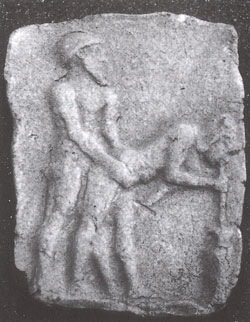
What falls under the category of “abomination” in the Old Testament is Idolatry. In context, the preceding verse in Lev. 18:21 prohibits child sacrifice to Molech, which “profanes the name of your God ‘ (Lev. 18:21). In spite of the monotheistic patriarchal deity that the Hebrews brought with them into the land of Canaan, various forms of mother-goddess worship and her associated fertility cult along with attendants who practiced male-on-male sacred prostitution remained an important part of goddess worship in the ancient Near East and in the land Canaan.
The Israelites had followed a warrior God into the land of Canaan and during the conquest of the land. But its not surprising that when they settled in the land and became farmers, they turned to the fertility goddess Asherah and her male consort Baal, in spite of the priestly and prophetic denunciations of these cults. Much of the Old Testament (especially Exodus, Numbers, Deuteronomy, Joshua, Judges, 1 and 2 Samiel, 1 and 2 Kings and 1 and 2 Chronicles) can be read as a propaganda against these pagan cults. The prophets Isaiah and Elijah railed against them. Below is a representation of Asherah, the Canaanite Mother Goddess with Baal, her bull consort.
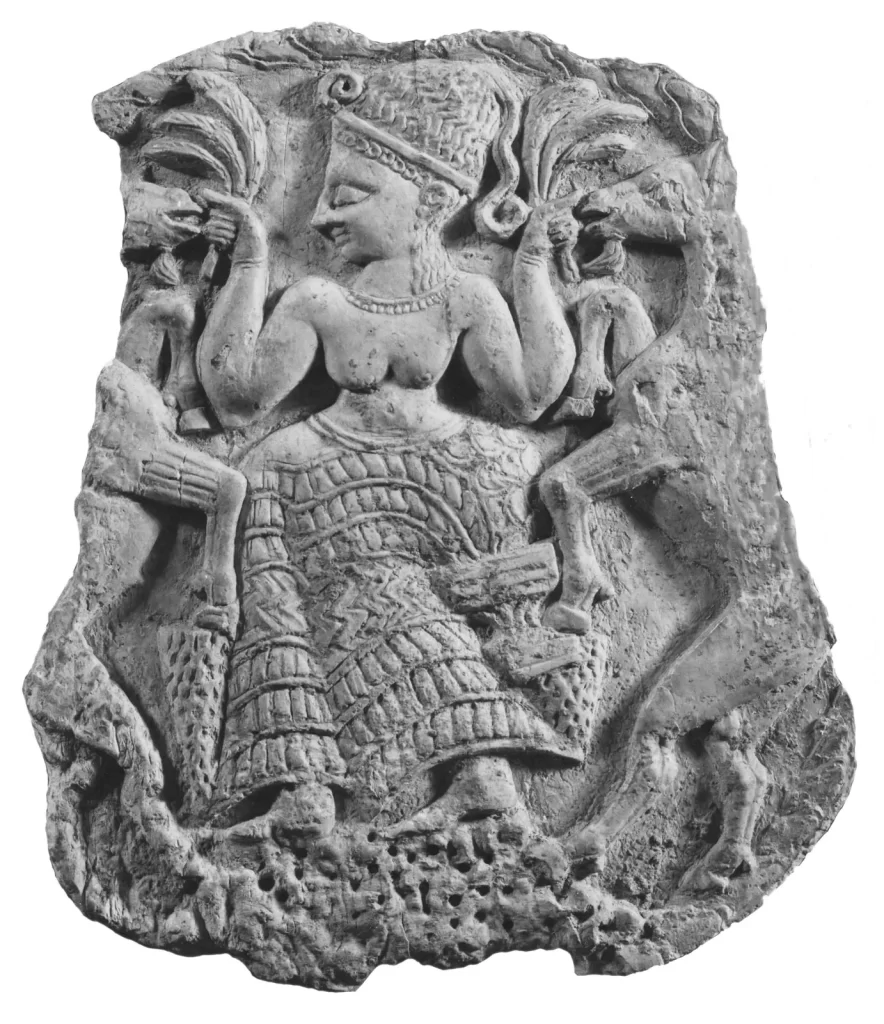
These cults practiced sexual rites to ensure the fertility of the land, its crops and livestock. This was facilitated by copulation with both male and female prostitutes who stood in for the deities. References to the kadesh (consecrated ones), the male temple prostitutes, and the kadeshem, the female prostitutes, appear multiple times in the Hebrew Scriptures. The Temple compound in Jerusalem included a house for these prostitutes that was not removed until the reforms of King Josiah (640–609 BC).
One ritual involved masturbation before Baal to arouse the god and bring rains to make Mother Earth fertile. The rites also included initiation of young men into orgasm in the Temple and ceremonies involving oral genital contact with the priests. That the prostitutes were paid for their services is evident in that their earnings were not acceptable as Israelite Temple tithes or offerings. “You shall not bring the fee of a prostitute or the wages of a male prostitute into the house of the Lord your God in payment for any vow, for both of these are abhorrent to the Lord your God” (Deuteronomy 23:18). This is referring to young Israelites who found employment in the fertility cults.
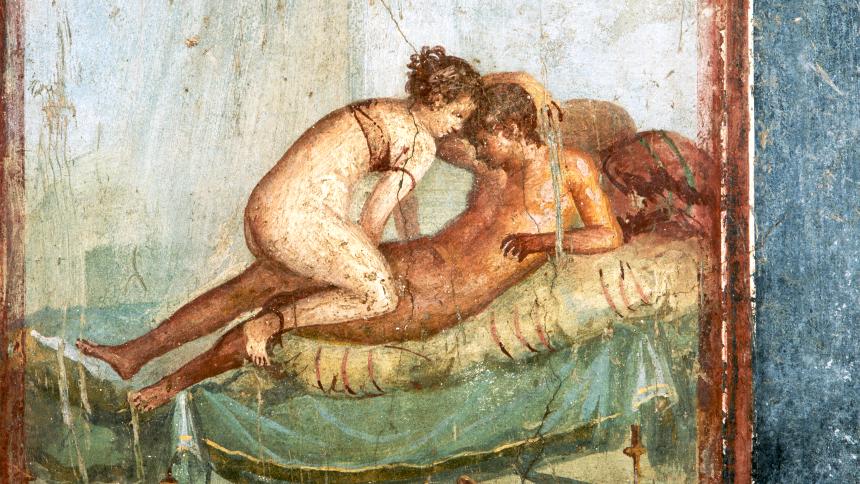
The record of the Old Testament describes the struggle against pagan fertility cults that continued throughout Israel’s history in Canaan, at least until the time of the Babylonian Exile. The injunction against male prostitutes was especially severe because it undoubtedly meant spilling the seed of Israel in the service of pagan gods. That’s why male-on-male sex was considered an “abomination.” Yahweh (the Lord) regularly reminded his people that he is a “jealous” God. He allowed no rivals for the devotion of his people.
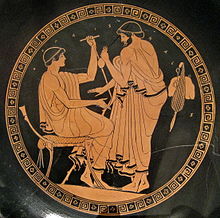
It may be that sacred prostitution was also the issue in I Corinthians 6:9 where Paul the Apostle listed arsenokoitai and malakoi among those who would not inherit the kingdom of God. These words are hard to translate. Malakoi refers to “soft ones” or “effeminates,” who could be young men who took the submissive position in male-on-male sex. Arsenokoitai is a neo-logism or a made up word which may be Paul’s attempt to render in Greek the Hebrew word in Leviticus for male-on-male sex. Presumably these are men who take the dominant position in sex. These words may refer to pornoeia or prostitution, but they definitely cannot refer to homosexuality in general as some English translations have rendered the two terms. Paul goes on in I Cor. 6:15–16 to refer to joining your body to a prostitute. Corinth was the site of the Temple of Aphrodite, which had prostitutes in service to the goddess. It was also a port city with ordinary male and female prostitutes who plied their trade among seafaring customers. Once again, then, prostitution was involved along with the “fornicators, idolaters, and adulterers” as well as men seeking sex with the soft ones. Below a man is bargaining with a prostitute on a Greek urn.
Romans 1:18–32 refers to God’s wrath that has given up men and women to their own desires because they they have not seen fit to acknowledge God who can be discerned in the natural world. Among their vices are exchanging their natures so that women exchange their customary sexual behavior and men give up sex with women to have sex with men. “Nature” here refers to custom. We don’t know whether women are having sex with women or taking the dominant instead of the submissive role in sex. If some men were taking the submissive role in male-on-male sex, that would be abhorrent to Roman practice. But the point is that this exchange of natures is the consequence of the idolatry of “exchanging the glory of the immortal God for images resembling a mortal human being or birds or four-footed animals or reptiles” (Romans 1:23).
What is not included in Paul’s letters is a reference to those whom we might regard as gay or queer in their lifestyle, the kinoidoi. Ancient Greek writers referred to the kinoidoi as naturally disposed to desiring male-on-male sex. It was believed that they ejaculated through the rectum. They were regard as effeminate by nature because like women they desired to be penetrated. Whatever was the cause of their desire, it led to them being categorized by philosophers such as Plato and Aristotle as a separate sexual species, neither women nor real men. Since they sometimes dressed like women, they were regard with loathing rather than with just curiosity. But the point is, that these were the only category of men in Greek society who exclusively desired male-on-male sex. Paul surely knew about them, but never mentioned them.
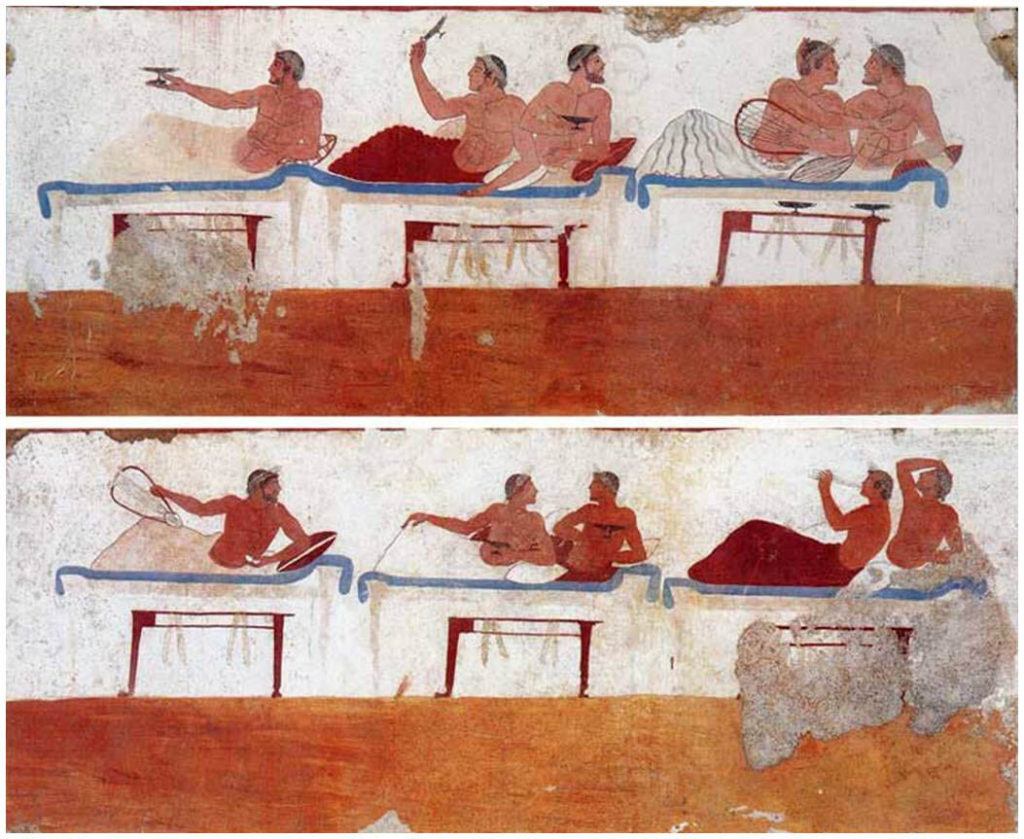
Everyone else in the Bible’s references to male-on-male sex, going all the way back to the men of Sodom (who never consummated their desire to “know” Lot’s angelic visitors because those angels blinded the people of Sodom) were potentially “straight” men who might be married with a wife and children but occasionally engaged in male-on-male sex, often with prostitutes or the Romans with their slaves (which, in a certain sense, was contrary to their “nature”). That they were whatwe would call “straight” is seen in the fact that Lot tried to placate the men of Sodom by offering his virgin daughter rather than violate the laws of hospiality.
With all this in view, how shall we answer the question of whether homosexuality is a sin. Homosexuality as a sexual category cannot in itself be a sin. But homosexual acts can be a sin, The Bible stresses that the sin or “abomination” of idolatry, and Rape, such as that contemplated by the men of Sodom, would be a sin. They never got to “know” the angels who were Lot’s house guests, because the angels blinded the men of Sodom. The rape never took place, but “the sin that cannot be named” has been called Sodomy. Homosexual rape has occurred many times, such as among athletic teams as a form of initiation, or among prison inmates, or on unsuspecting youth. Rape is forcing sex when there is no consent to have it, whether female or male.
What would Jesus do? It’s not a question I usually ask, but this time there is the actual example of Jesus healing the Roman Centurion’s sick slave. It was well known that Roman officers traveled with young male slaves who served their needs and provided “comfort” when needed. Romans could only have male-on-male sex with a slave, not with another free-born Roman. While this practice was undoubtedly known, Jesus did not question it. Nor, for that matter, did St. Paul question what a Christian slave might be required to do with his pagan master. He only said, “Slaves, obey your masters.”

As we no longer accept ancient servitude or chattel slavery in earlier America, we now accept the love of men for one another in our society. What Churches or pastors might do with those whom we designate LGBTQ is determined by their theological positions and pastoral situations. Homosexuality as a self-understanding of one’s sexuality is not a sin. But the sins of homosexuals are the same as the sins of heterosexuals, including the sexual sins of rape, incest (family members), pederasty (boys), and (for the married) infidelity. Yet as Paul wrote in Romans 3:23–24, “Since all have sinned and fall short of the glory of God; they are now justified by his grace as a gift; through the redemption that is in Christ Jesus, whom God put forth as a sacrifice of atonement by his blood, effective through faith.” Those who repent of these sins and seek forgivenes in Christ can be saved.
Homosexuality in and off itself is not a sin if the couple truly loves one another.
Pastor Senn







Text message from a fellow pastor.
Thank you for posting and for sharing. I think many Christians don’t care to look at the cultural reasons behind same-sex prohibitions, the fact that same-sex behavior is sometimes linked with idolatry, or that at other times, it is referring to rape. They assume that you can look at these verses in a 21st century context and can read that 21st-century context back into the time of Moses or Paul. The fact that so little info of the type you have provided is given by clergy who think all same-sex behavior is wrong, fuels the idea that the words should be understood without reference to the religious and cultural norms and aberrations of that time. And of course, as you pointed out at the end, Christians single out homosexual behavior as a worse sin than the sins they are committing, refusing to see the Bible condemnation of all humanity as sinners who can be saved by God’s grace through faith in Jesus Christ. I have often wondered by what special dispensation of Grace they feel they will be saved while they are condemning others to eternal damnation for their sins?
Thank you for the help you offer to the LGBTQ people who are true believers and want to obey God, but by no fault of their own find themselves to be outside the “norm” in their sexual self understanding.